|
Getting your Trinity Audio player ready...
|
South Korea is facing an unprecedented political storm following the issuance of an arrest warrant for President Yoon Suk Yeol. The judiciary’s decision marks a dramatic escalation in the country’s unfolding crisis, which began weeks ago when Yoon controversially declared martial law in response to mass protests and growing civil unrest. While the official justification for the warrant points to allegations of corruption and abuse of power, the reality appears far more entangled in the fallout from Yoon’s authoritarian measures and his rapidly deteriorating relationship with the National Assembly.
The declaration of martial law, which effectively mobilized military forces to suppress dissent, was met with fierce backlash from opposition lawmakers and the public. Parliament acted swiftly, initiating impeachment proceedings that Yoon narrowly survived. However, the damage was done—while impeachment failed, the legislature voted to strip him of significant executive powers, leaving him a lame-duck president in all but title. The warrant for his arrest appears to be the judiciary’s attempt to address lingering public anger and institutional distrust toward Yoon’s administration.

This raises pressing questions about the legality and implications of the court’s actions. Can South Korea’s judiciary, even under the banner of upholding the rule of law, legally detain a sitting president? The nation’s constitution provides for presidential immunity during a term in office, barring extreme cases like impeachment. Yet with Yoon’s authority diminished and much of his cabinet sidelined or resigning in protest, the lines between executive privilege and accountability have blurred.
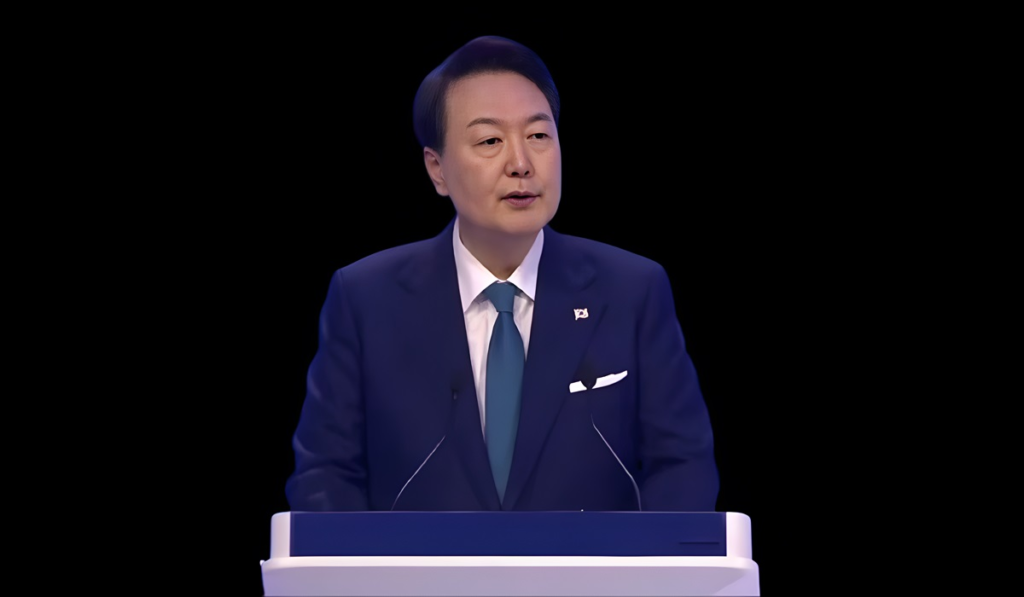
South Korea’s history is no stranger to post-presidential prosecutions. Former leaders such as Park Geun-hye and Lee Myung-bak faced legal consequences after their terms ended. But never before has a sitting president been the target of judicial action at this level. If the courts proceed, South Korea risks plunging into deeper political chaos. Yoon’s supporters decry the arrest warrant as a “soft coup” orchestrated by opposition forces leveraging the judiciary to bypass electoral processes. Meanwhile, his critics argue that failure to hold him accountable could undermine South Korea’s democratic institutions, emboldening future leaders to overreach their authority.
What happens next is far from certain. Will Yoon willingly comply with the arrest order, or will his diminishing circle of allies attempt to defy the court? Could this spark further unrest, leading to another attempt at impeachment or even his forced removal? And if Yoon’s legal troubles escalate, what precedent does this set for South Korea’s fragile balance of power between the executive, legislative, and judicial branches?
Ultimately, this crisis exposes critical vulnerabilities in South Korea’s political framework. The nation now faces a reckoning not only with Yoon Suk Yeol’s presidency but with the broader question of how resilient its democracy truly is when confronted by authoritarian tendencies within its highest office. The days ahead will determine whether South Korea emerges stronger, reaffirming the supremacy of law, or if it tumbles deeper into a constitutional crisis from which recovery will be long and arduous.
-
Nigeria’s Air Peace Spreads Its Wings to London – A Milestone in African Aviation.
Spread the love In a monumental stride for African aviation, Nigeria’s leading airline, Air Peace,…
-
Salah’s Holiday Controversy: Christmas Tree Sparks Debate Amidst Plea for Global Peace.
Spread the love Each festive season, Mohamed Salah manages to ignite a holiday controversy, and…
-
Putin threatens Finland over NATO membership
Spread the love In a recent episode of the Moscow Kremlin Putin program, Russian President…
-
Unveiling Austria’s Corporate Sleuths: Private Eyes on Sick Leave
Spread the love In the picturesque landscapes of Austria, where tradition and modernity intersect, a…
-
Arsenal sells 80 million flop to Turkey
Spread the love Arsenal FC has now managed to sell Nicolas Pepe after all. The…
-
Tottenham’s Busy Summer Continues as Omar Marmoush Becomes Eighth Signing
Spread the love 1 1Share It’s been a busy transfer window for Spurs as Omar Marmoush…
-
RUSSIA-UKRAINE WAR: EIGHT SCENARIOS THAT COULD DECIDE HOW THE CONFLICT ENDS
Spread the love 1 1ShareReports that CIA Director John Ratcliffe may have travelled to Moscow have…
-
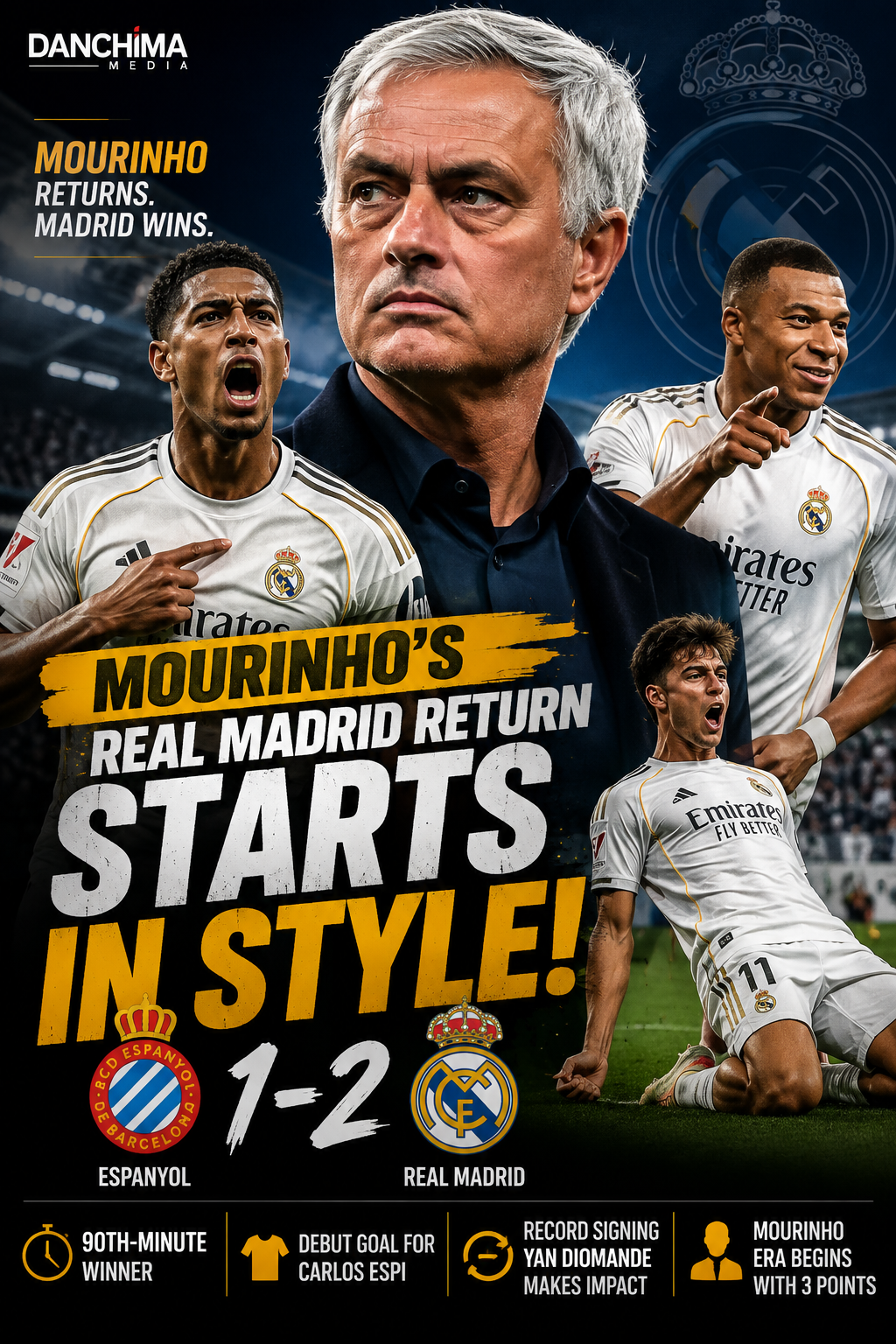
MOURINHO’S NEW ERA: REAL MADRID LEAVE IT LATE
Spread the love 1 1ShareJose Mourinho’s return to competitive football with Real Madrid got off to…
-
Real Madrid escape first league week Drama at Espanyol.
Spread the love 1 1ShareJose Mourinho’s first competitive match of his second spell as Real Madrid…
-
MARESCA ERA STARTS WITH LAST-GASP CITY DRAMA AS VILLA SUFFER 4–0 HUMILIATION.
Spread the love 1 1ShareManchester City have opened the post-Pep Guardiola era with a dramatic 2–1…
-

Premier League Has Lost Its Fear Factor: Nobody Is Safe This Season
Spread the love Manchester City’s post-Pep Guardiola era began with late drama as Josko Gvardiol’s…